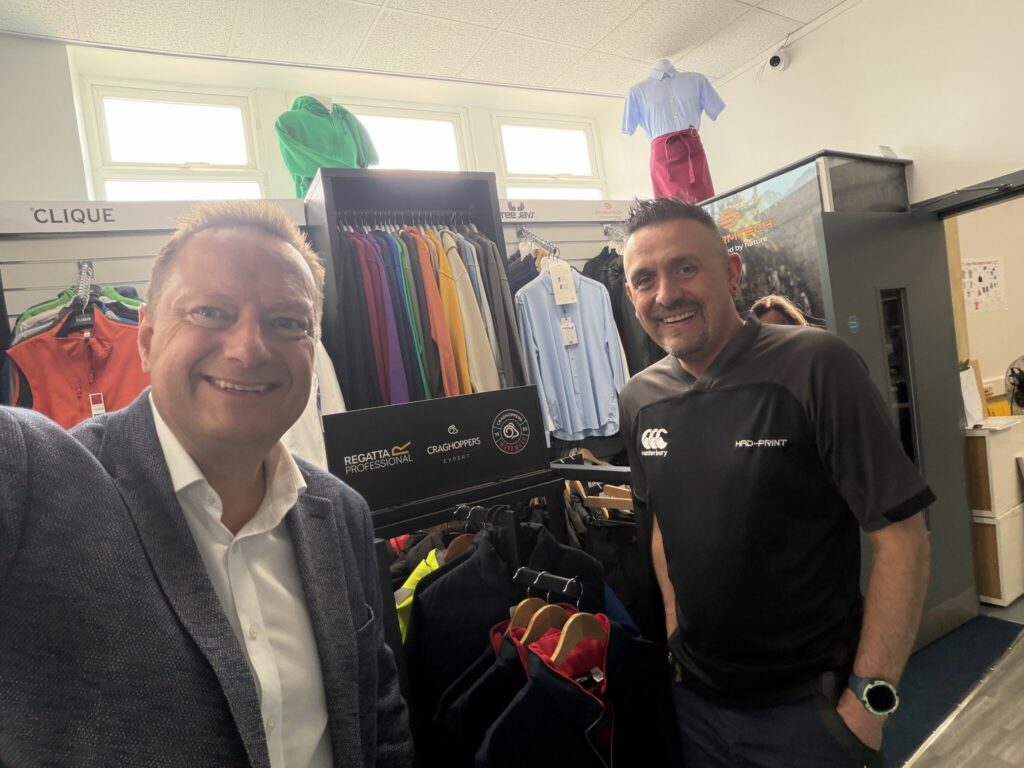
It was a pleasure to welcome Jason McCartney, Chairman of Mid Yorkshire Chamber of Commerce, to our new Huddersfield premises recently.
Jason has long been a passionate advocate for businesses across Huddersfield and West Yorkshire, particularly our manufacturing sector. He understands the challenges local businesses face, but more importantly, he champions the opportunities that exist when businesses work together, invest and continue to innovate.
Having the chance to show him around our new home gave us the opportunity to demonstrate how HAD-Print has evolved. From commercial print and large format graphics through to branded workwear, signage, promotional merchandise and brand implementation, we’ve continued to invest in bringing more production under one roof, making life easier for our customers and giving them greater consistency across everything that carries their brand.
Manufacturing remains a huge part of our business. We work alongside manufacturers throughout the region, helping them improve efficiency, maintain brand consistency and present themselves professionally, whether that’s on the factory floor, in the boardroom or out on customer sites.
Mid Yorkshire Chamber continues to play an important role in connecting businesses, sharing knowledge and creating opportunities across the region. Being part of that community isn’t simply about networking; it’s about surrounding yourself with businesses that genuinely want to see Yorkshire succeed.
Thank you, Jason, for taking the time to visit us, for your continued support of local businesses and for everything you do to champion manufacturing and enterprise across our region. We look forward to working together and continuing the conversation.
Here’s to a strong future for Huddersfield business.
If you were heading to the Cheltenham Gold Cup, you’d of researched your horses and riders thoroughly knowing where you’d place your bets.
However, placing your next print project with a commercial printer is a different game.
So, you need a game plan… What do you look for?
Awards and recognition
HAD-Print is recognised and award-winning, Mid Yorkshire Chamber doubly recognised HAD-Print in 2023 for “Member of the Year” and for the work we’ve done supporting diversity and inclusion, through the print projects we’d worked on.
This level of attainment isn’t something which is brought, it takes previous experiences to achieve this. Stuart Nimmo (HAD-Print’s lead), back in 2005 was recognised by the British Printing Industries Federation for an annual impact report, and previously in 1998 by Citizens Advise Network for a local annual report for Stratford Upon Avon CAB. He’s also created highly acclaimed manuals and training resources throughout the 2010’s.
What do others say
Interestingly most of our work comes by referral. Those who know what we do, appreciate us and recognise us accordingly. A good friend of the business Mark Evans (previously of Better Telecoms) famously said, “It’s not the story you tell, but the Story others tell of you” or as we paraphrase “What’s the Story Morning Glory”. Needless to say, Mark happily sings our praises like many others on Linkedin. Equally, our review profile on the search sites backs this up.
Education and training
In an industry which has seen significant change, this still plays a part. Stuart Nimmo (HAD-Print’s lead), had a pretty unique rounded education in the graphic arts, starting with a National Diploma in Graphic Design (Coventry Technical College). Moving on to a Higher National Diploma in Design Print Management (Northampton University), where he discovered a wider understanding of the graphic arts industry. He has also completed City & Guild Level 3 in photography (Coventry Technical College) – making his eye for detail rather refined. Stuart Nimmo also attends industry conferences like the IPIA’s and Visual Media Conference (VMC), along with Wilsons Republic events in Huddersfield. However, as a business, HAD-Print has also provided training and development to our staff, one being Stuart Boddy who has progressed in garment decoration and has attended courses on the technicalities of industrial embroidery production. The production team also attends industry events for additional learning.
Visual evidence
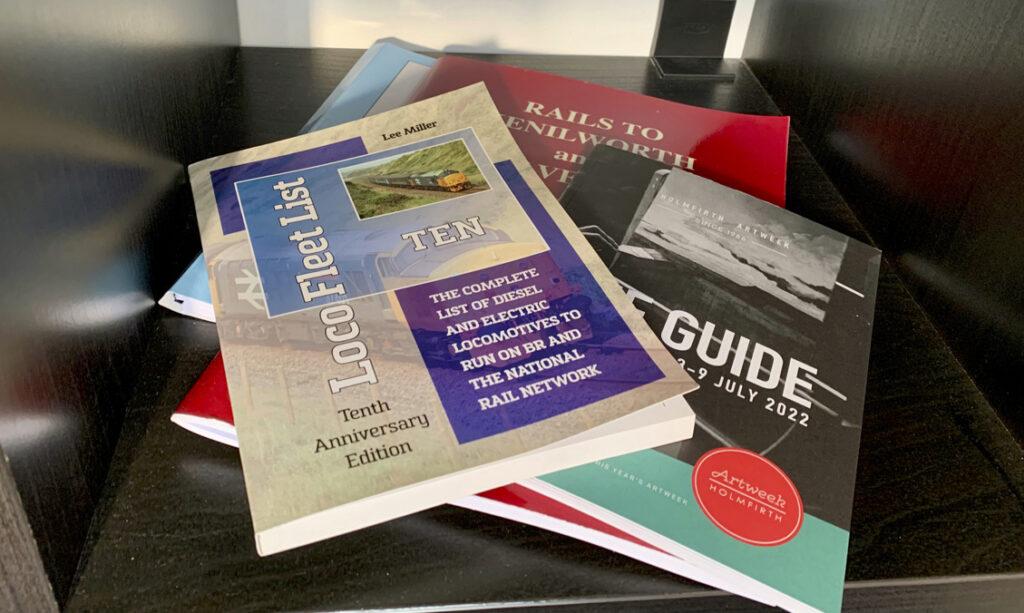
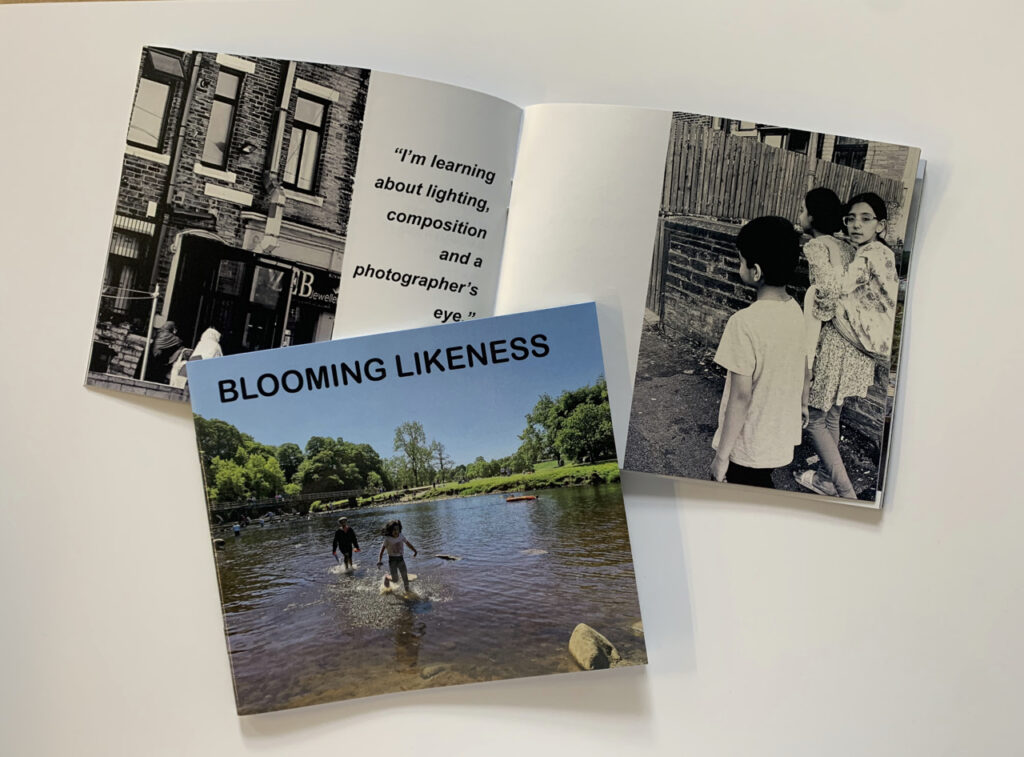
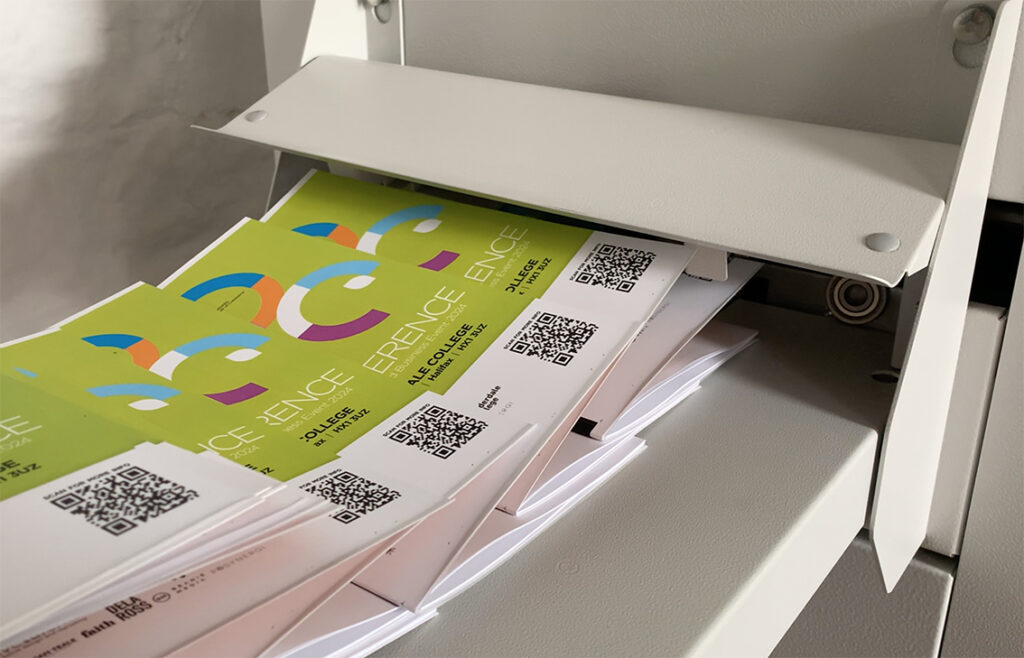
We are more than industry experts, we produce and have our production facility covering sheet-fed digital print for marketing collateral, books and a lot more. Large format graphics capabilities and garment print and embroidery. All of this is clearly seen in real-world photographs on social media. There is a big difference between agencies/brokers and real-world print production houses. As a producer, we have full supply chain support from paper merchants, garment wholesale distribution channels and a lot more.
Get to know us
You cannot beat meeting people face-to-face to learn more. Unpacking how we think will help you understand more about what we do. As they say, seeing is believing and a lot of people who come in to see us, always discover more. Whether it is by getting touchy-feely with samples or discovering different finishes or techniques of what we can produce.
Print finishing and binding techniques, when executed properly, can significantly enhance the value of your project.
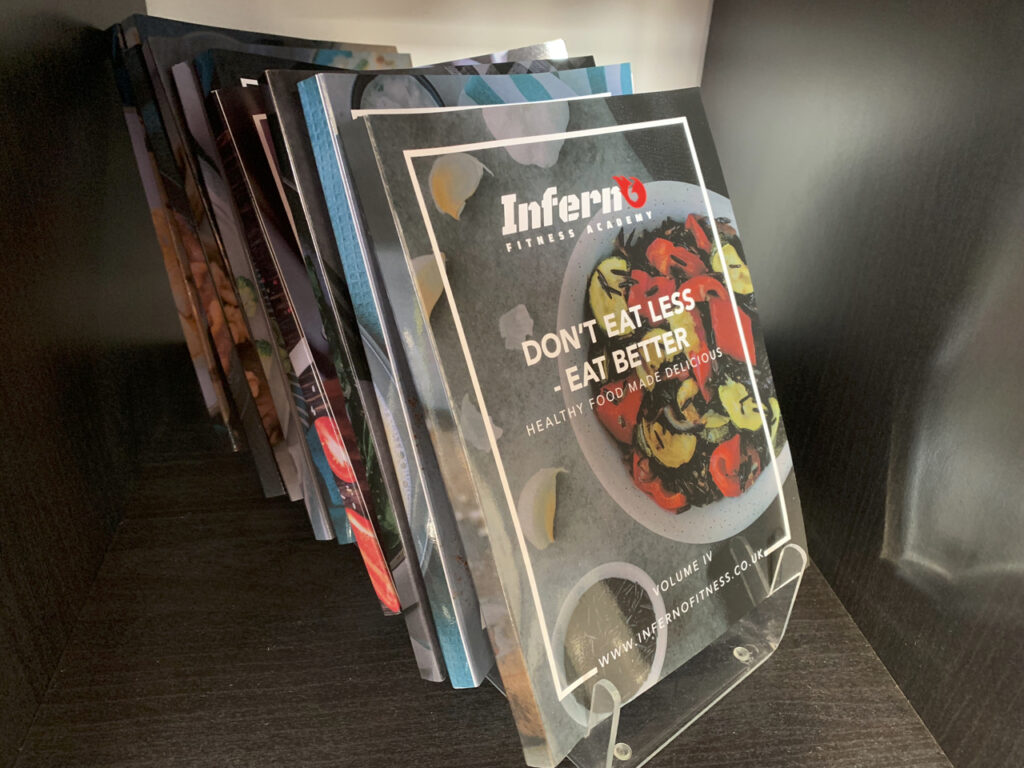
A multi-page document, such as a brochure, book, or booklet, requires finishing to achieve the best possible look and feel. The process of gathering and assembling multiple pages is known as binding. There are various methods for binding, and below are techniques that may be familiar to you, along with some that might introduce you to new possibilities for elevating your bound project.
Saddle Stitching
Saddle Stitching is a method similar to simple stapling, where groups of four pages (known as a signature) are collated together and stitched using metal wire at the center fold. The wire is stitched inward from the outer spine and is visible on both the inside and outside of the document. Depending on the weight and thickness of the paper, you can bind from 8 pages (2 signatures) up to 72-84 pages using this method. However, a higher page count can cause the pages to extend beyond the spine, a phenomenon known as creep. This can be managed by properly imposing the pages for printing.
Square Back Saddle Stitching
A recent advancement of the saddle stitch is Square Back Binding, which elevates the saddle stitch to a new level. This technique results in a square spine formed by a special module inserted into the machine. The “square folder” applies pressure to the spine of the saddle-stitched book, creating the flat spine typically found in perfect-bound books. The advantage of this technology is that it accommodates a higher number of pages. However, it’s important to note that the staples remain visible on the spine, which can impose certain design limitations.
Side Wire Stitching, also known as stab stitching, involves piercing a metal wire through the edge of loose pages from front to back. The wire is then folded back on itself and covered using binding tape or a custom-printed spine cover.
Perfect Binding
Perfect Binding employs grouped sections or loose pages (leaves) that have a hot glue coating along the edge and are then placed inside a separate wrap-around cover. This binding method is considered premium and requires a minimum spine thickness of 3mm. Contrary to popular belief, simply increasing the weight of the cover while reducing the weight of the text pages is not advisable, as this can weaken the binding. For bindings with a minimum thickness of 3mm, it is better to use a cover thickness around 250gsm and increase the text page weight to 170gsm for a more substantial and durable finish.
Wire-o Binding
Wire-O Binding consists of a document made up of loose leaves with a loose front and back cover, which are punched along the edge and held together using wire. These wires come in a wide variety of colours, lengths, and diameters to suit almost any application. This binding method allows documents to lay flat and can be easily combined with different page widths to create stepped catalogues, as well as accommodate tabbed dividers.
Half Canadian Wire-O Binding
This method is similar to standard Wire-O binding but includes the added benefit of allowing for a printable spine and partial covering of the wire. A single-piece cover is creased and folded around punched loose leaves, and a wire comb is then bound through the back cover only. This creates the appearance of a spine, while the comb is only visible from the back of the document.
Full Canadian Wire-O Binding – This method offers a finish very similar to Half Canadian Wire-O binding, with the key difference being that the wire is bound through both the front and back covers, while still providing a printable spine.
Plastic Comb Binding – This method is similar to Wire-O binding, although it is currently less popular. It is another option for gathering loose leaves with various cover options. Instead of square or round holes as in Wire-O binding, a comb binding uses a rectangular slot punched along the binding edge. After the document is punched, a comb is stretched open and the document is hooked over it. Once the comb is closed, the teeth of the comb secure the pages under the spine element.
Chicago Screw Binding
This binding method collates loose sheets together to form a book block. Two to four evenly spaced holes are drilled along the spine side, approximately 1 cm from the spine edge. The Chicago Screw consists of a two-part element with a screw that sinks into a threaded barrel. These are inserted through the holes, and the slotted cap screw is tightened. This method allows for creative cover options, such as duplex board, which can be combined with a Swiss-style bind where the book block attaches to the back cover.
When considering binding options, the choice of cover material is crucial. Some documents work well with 250gsm or 300gsm gloss or silk art board, while others may benefit from Folding Box Board (FBB), which offers a different level of bulk for added protection. Publications with a longer lifespan may feature lamination, available in gloss, matte, or soft touch finishes. It’s also possible to use a lightweight jacket over the cover, which tucks into the inside front and back covers.
Certain covers can incorporate French flaps, where the cover folds back into the front and back, creating a more prestigious finish and providing additional durability.
The scope of book binding is vast. In an age where internet-driven print services can dictate your options, engaging with an experienced bespoke print house can yield better results, allowing for greater creativity. Unlike internet “shed” portal print providers, we don’t restrict the paper stocks used; you can vary the paper within your publication.
With over three decades of experience in commercial print, we can help you achieve more. Why not start a conversation with us?